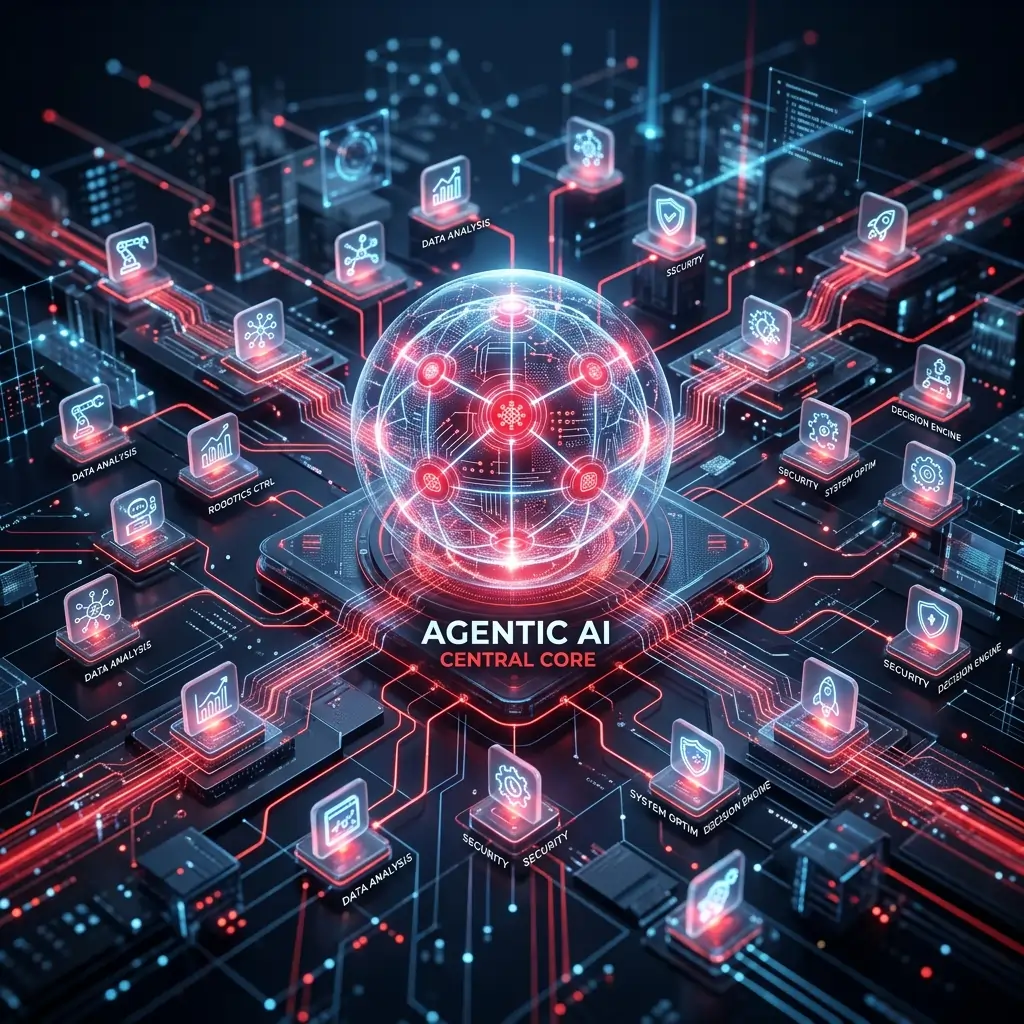
The digital landscape is shifting from Conversational AI to Agentic AI. While the former focuses on dialogue and response, Agentic AI is built for action. In 2026, the question is no longer "What can AI tell me?" but "What can AI do for me?"
The Paradigm Shift: Generative vs. Agentic
Generative AI models like GPT-4 brought us incredible capabilities in content synthesis. However, Agentic AI introduces a layer of autonomy. These autonomous agents can plan complex tasks, use external tools (like browsers, databases, and APIs), and correct their own errors through reasoning loops.
At RedRuby Digital, we specialize in building Agentic AI Workflows that integrate seamlessly into existing business stacks. By leveraging frameworks like LangChain and Microsoft AutoGen, we create multi-agent systems where specialized "workers" collaborate to solve high-level business goals.
Multi-Agent Systems: Orchestrating the Future
One of the most powerful aspects of Agentic AI is Multi-Agent Orchestration. Imagine a digital marketing workflow where:
- Research Agent: Scours current market trends and competitor data.
- Content Agent: Drafts SEO-optimized copy based on the research.
- Correction Agent: Fact-checks and aligns the tone with brand guidelines.
- Deployment Agent: Schedules and publishes the content across multiple CMS platforms.
This level of automation isn't just about saving time; it's about achieving a scale and precision that human teams alone cannot match. For more details on how this affects search rankings, see our SEO Strategy Guide.
Future-Proofing Your Business
As we move further into 2026, businesses that fail to adopt agentic workflows will find themselves at a significant competitive disadvantage. The ability to deploy autonomous agents for lead generation, customer support, and technical project management is becoming the new standard for operational excellence.