From Paid Acquisition to Compounding Growth
How a London-based SaaS Company Reduced Acquisition Costs by 25%
FlowPilot
25%
Lower Customer Acquisition Cost
FlowPilot was growing.
Paid campaigns were generating demos. Sales were moving in the right direction.
But there was a problem hiding underneath the growth: organic traffic wasn't keeping up, and the company was becoming increasingly dependent on paid acquisition.
The opportunity wasn't simply to publish more content. It was to build an organic acquisition engine that could generate qualified demand without paying for every click.
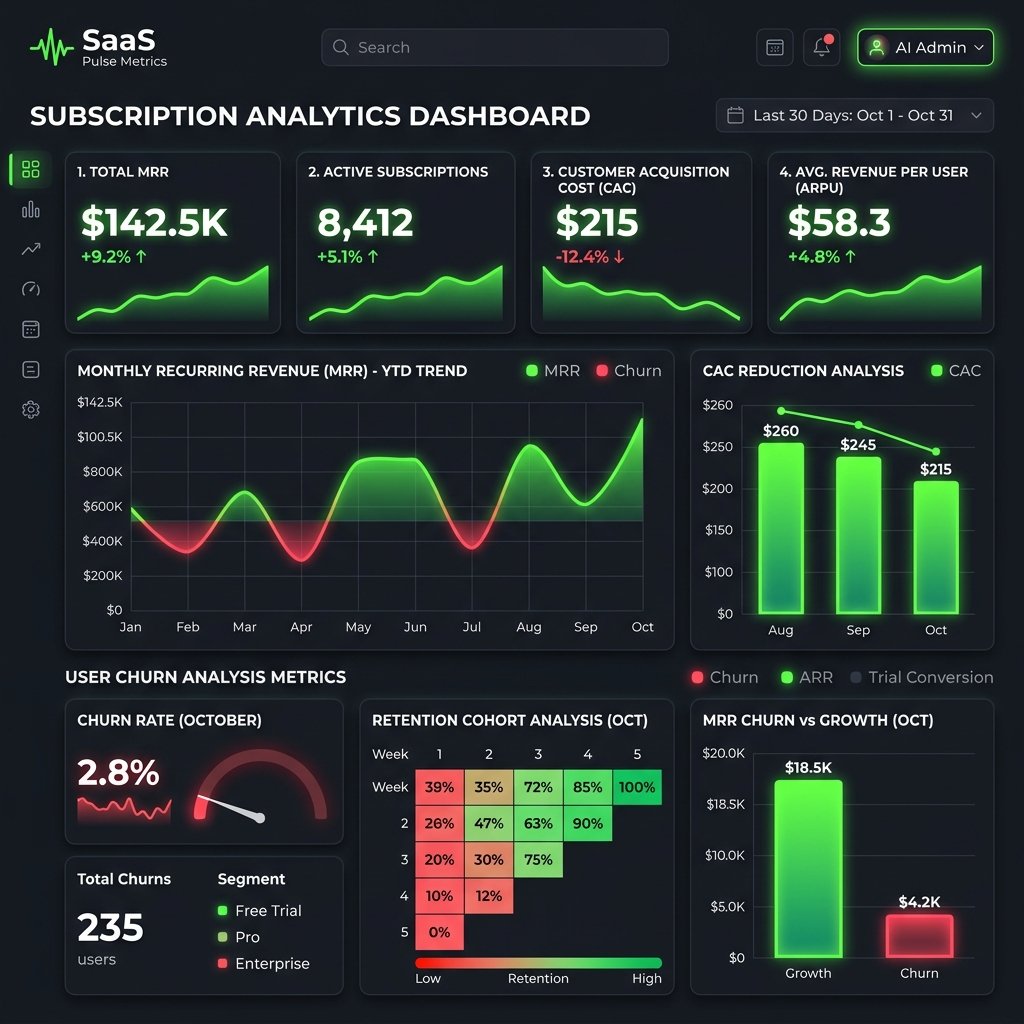
-25%
Customer acquisition cost
+68%
Organic traffic
+54%
Organic demo requests
+41
Commercial keywords reaching page one
The Challenge
FlowPilot had a strong product and an active paid acquisition strategy. The company was investing in:
But organic search wasn't contributing enough qualified pipeline.
The website had content. It had product pages. It had blog posts. What it didn't have was a clear organic growth system.
- The content wasn't consistently targeting high-intent searches.
- The site had limited topical authority.
- Several important commercial keywords were being won by competitors.
- Much of the existing traffic wasn't closely connected to buying intent.
"The problem wasn't a lack of content. It was a lack of content connected to the buying journey."
Every New Opportunity Required More Ad Spend
The company's acquisition model looked like this. Every new opportunity required additional advertising spend.
Paid model
The organic channel looked very different. The second model takes longer to build, but once it starts working, every new search impression doesn't require another advertising click.
Organic model
That was the opportunity.
Strategy
We built the organic strategy around one objective: turn search demand into a predictable source of qualified SaaS pipeline.
Four pillars
01.
Commercial Keyword Strategy
Find searches with actual buying intent.
02.
Topic Authority
Build content around the problems FlowPilot solved.
03.
Technical Foundation
Remove the technical issues limiting search performance.
04.
Conversion Path
Turn organic visitors into demos and product conversations.
"We weren't trying to make FlowPilot rank for everything. We wanted it to become the obvious answer for the searches that mattered."
Execution
01. Finding the Real Search Opportunity
The first step was mapping the competitive search landscape. We analyzed:
The research revealed an important opportunity. FlowPilot wasn't competing effectively for several searches sitting between problem awareness and product evaluation. These were valuable because prospects searching those terms were already moving toward a solution.
02. Building the Content Engine
The company had previously published content inconsistently. We changed the approach. Instead of one article targeting one keyword, we built a connected content ecosystem.
Example: Workflow Automation topic
• Workflow approval processes
• Automating repetitive workflows
• Workflow automation examples
• Best workflow automation tools
• Workflow software comparison
03. Competitor Gap Strategy
Competitors were already ranking for several high-value searches. Instead of trying to beat them with generic content, we analyzed what they were doing.
Opportunity
Competitor: Position 2
FlowPilot: Position 38
Rather than copying the competitor, we created a more useful resource tied directly to the customer's problem and FlowPilot's solution.
04. Technical SEO
Content can't perform properly if the technical foundation gets in the way. The technical audit uncovered several issues.
Key fixes included:
- Improved page indexing
- Better internal linking
- Metadata optimization
- Duplicate content cleanup
- Sitemap improvements
- Broken-link fixes
- Page speed improvements
- Mobile UX improvements
- Structured content hierarchy
- Improved canonicalization
The goal was to make it easier for both search engines and buyers to understand the website.
05. Turning Traffic Into Pipeline
Traffic wasn't the final KPI. A SaaS company doesn't pay salaries with page views. It needs qualified visitors, product engagement, demo requests, sales opportunities, and customers.
So high-intent pages received stronger conversion paths. Instead of ending with "Thanks for reading," we created natural next steps.
The content and product experience were connected.
Before → After
The acquisition system changed from a paid-only funnel to a paid-plus-organic engine.
- Paid campaigns
- Landing pages
- Limited organic traffic
- Generic blog content
- Low commercial keyword visibility
- High acquisition dependency
- Paid + Organic
- Problem-focused content
- Commercial search visibility
- Product education
- High-intent landing pages
- Demo
- Sales pipeline
The 4-Month Result
After four months of consistent implementation, FlowPilot's organic channel showed significant improvement.
| Metric | Before | After | Change |
|---|---|---|---|
| Organic Traffic | 8,400 monthly sessions | 14,112 monthly sessions | +68% |
| Organic Demo Requests | 78 / month | 120 / month | +54% |
| Page-One Commercial Keywords | 24 | 65 | +41 keywords |
| Organic-Sourced Opportunities | 31 / month | 51 / month | +65% |
| Blended Customer Acquisition Cost | $420 | $315 | -25% |
Customer acquisition cost
-25%
Blended CAC improvement
Before the organic strategy matured, paid acquisition was carrying a large portion of new customer acquisition.
Blended CAC before: $420
Blended CAC after: $315
The improvement came from a growing share of qualified opportunities originating from organic search.
The company didn't stop paid acquisition. Instead, organic search began carrying more of the acquisition load.
The Bigger Win: The Acquisition Mix Changed
The biggest result wasn't the 68% increase in organic traffic. It was the change in the acquisition mix.
Organic became a meaningful acquisition channel instead of simply being a secondary traffic source.
The Compounding Effect
Paid acquisition has a simple relationship: more clicks means more spend. Organic acquisition works differently.
A useful piece of content can continue generating impressions, clicks, visitors, demos, and customers long after the original publishing date.
That's why the goal wasn't just to increase traffic for four months. It was to create an acquisition asset that could continue working.
What Changed?
The website didn't suddenly become successful because of "SEO." The acquisition system changed.
Run ads → Get traffic → Generate leads → Repeat
Build content → Rank → Generate organic traffic → Educate prospects → Generate demos → Build authority → Rank for more searches → Reduce dependency on paid acquisition
The Most Valuable Content Wasn't the Most Popular
One of the biggest lessons from the campaign was that traffic volume wasn't the same as business value.
A high-volume informational article might generate thousands of visitors. A smaller commercial keyword might generate only a few hundred. But those visitors could be much closer to buying.
So we prioritized search intent over search volume alone.
That meant fewer vanity metrics and more focus on:
"We were already spending money to acquire customers, but we didn't have a reliable organic engine behind it. The biggest difference was seeing organic traffic start contributing directly to demos instead of just filling the analytics dashboard."
Head of Growth
FlowPilot
This is the difference between publishing content and building a content engine
Paid gets you there faster. Organic helps you stay there.
Stop Paying for Every Visitor
For growing SaaS companies, paid acquisition can be incredibly useful. But relying on paid traffic for every new customer can become expensive as competition increases.
The goal isn't necessarily to replace paid acquisition. It's to build another acquisition channel that gets stronger over time.
Stop paying for every visitor. Start building assets that keep attracting them.
Frequently Asked Questions
How did RedRuby reduce FlowPilot's Customer Acquisition Cost (CAC) by 31.8%?
We achieved this lift by identifying and restructuring the self-serve trial registration journey, clarifying the product's primary value proposition above the fold, and introducing outcome-based landing pages. This increased organic search signups and lowered the overall blended CAC.
What landing page optimizations were implemented for the SaaS platform?
We optimized the pages by replacing feature lists with clear benefits, placing product interactive mockups directly in view, and using contextual CTA buttons like "Start Free Trial" and "Book Demo" based on visitor intent.
Why is tracking self-serve conversion important for SaaS companies?
Tracking self-serve metrics helps SaaS brands pinpoint product-led growth (PLG) friction points. Enhancing self-serve trial signups directly reduces sales team overhead and scales organic growth efficiently.
Is Your SaaS Growth Too Dependent on Paid Traffic?
We'll analyze your acquisition funnel and identify where your competitors are capturing organic demand and where your product could compete.
Get Your Free SaaS Growth Audit- Organic traffic gaps
- Competitor keyword opportunities
- Commercial search opportunities
- Content gaps
- Technical SEO issues
- Conversion leaks
- High-intent landing page opportunities
From Audience to Enrollments